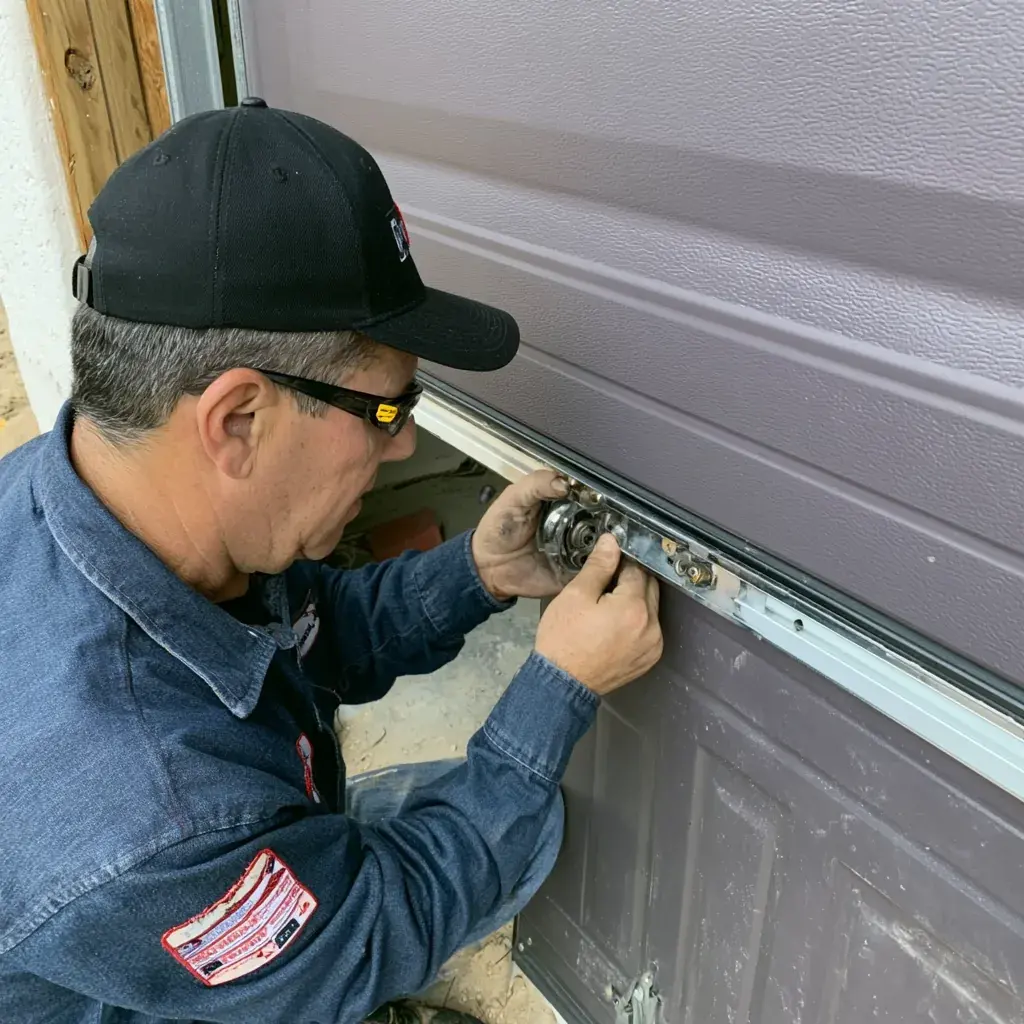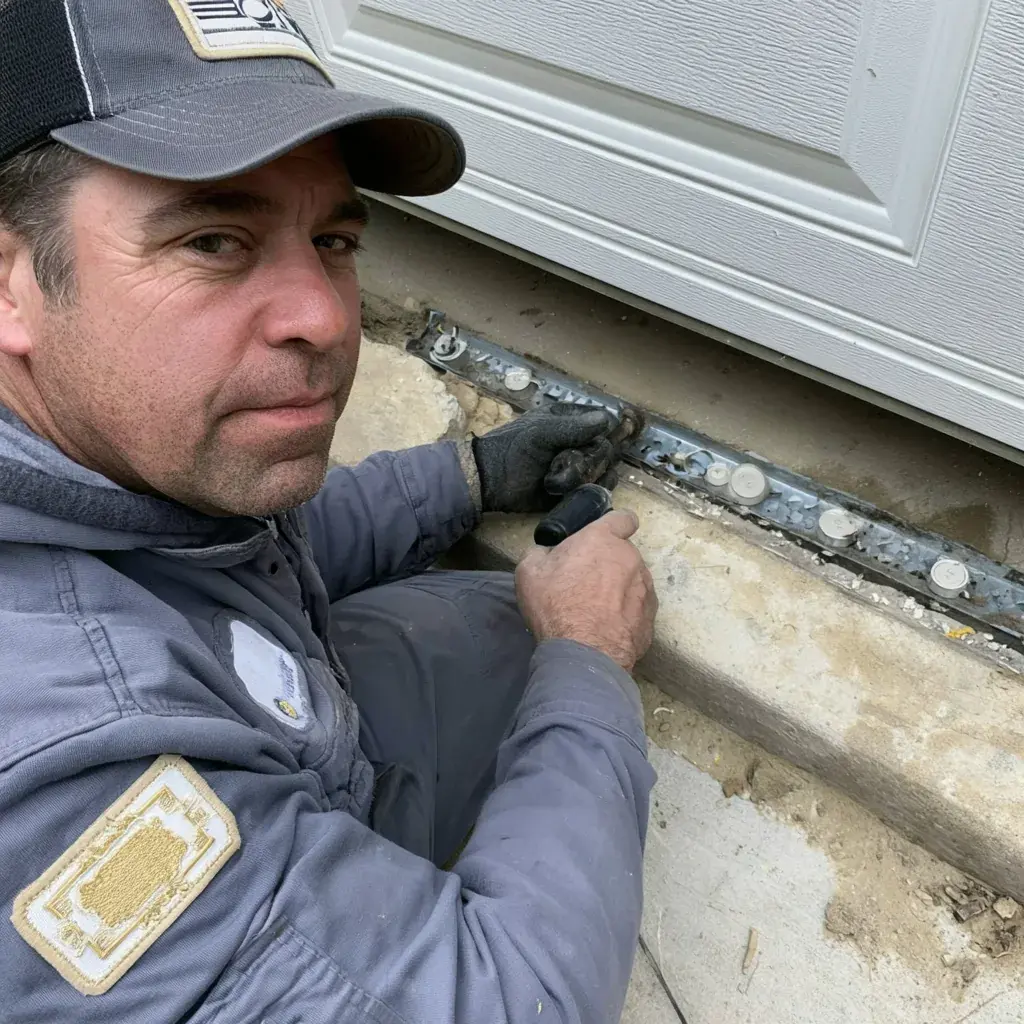
The question usually comes up when someone notices orange streaks bleeding down a garage door panel or flaking scale along the bottom track. It happens most near the coast, in Terramar, Tamarack Point, and South Beach, where the marine layer rolls in most mornings and leaves everything metal a little damp before the sun burns it off. A door that looked fine in spring can show rust by fall in these blocks.
What Marine Layer Actually Does
Marine layer is the low coastal fog and moist air that settles over Carlsbad overnight and into the morning, especially close to the water. It carries fine salt from the ocean and deposits it on anything metal outside, including garage door tracks, hinges, and torsion springs. That combination of moisture and salt speeds up oxidation far faster than plain rain would, since the salt keeps drawing moisture back to the metal even after the surface looks dry.
How Rust Spreads Through Hardware
Rust rarely stays on the surface. It starts as a rough patch on a hinge or roller bracket, then works into the pitting that makes hardware bind or squeal instead of moving smoothly. Springs are the bigger concern, since a torsion spring with rust pitting can lose strength unevenly along its coils. Tracks close to the ground pick up the worst of it, both from marine layer condensation and from sprinkler overspray in yards along La Costa Avenue and Poinsettia Lane.
Why Panels Rust From Chips
Panels rust differently than hardware. Steel garage doors have a painted finish that resists salt air for years, but any chip, scratch, or ding exposes bare metal underneath, and that spot rusts outward from the edges. Once rust gets under the paint, it lifts the finish around it, so a small chip left alone in year one becomes a visible bubble or flake by year three, especially on doors facing west toward the ocean.
Checking Your Door For Rust
Checking for rust starts with a flashlight, not a wrench. Look at the bottom two feet of both tracks, where sand and moisture collect, and run a hand along the springs above the door for rough or flaking spots. Check hinges at the panel joints and the lag screws anchoring the track brackets to the frame. If a hinge feels gritty or a spring shows orange dust on your fingers, that is active corrosion, not just surface staining.
What's Safe To Clean Yourself
A garage door owner can handle light surface rust safely with a wire brush and a rag, working on hinges and track sections while the door is closed and the opener is unplugged. What crosses the line into a stop point is any rust on the torsion spring itself, rust that has pitted a cable, or a track bracket where the rust has weakened the screws holding it to the frame. Springs under tension are dangerous to touch once their metal is compromised.
Where This Hits Hardest Locally
This shows up most in homes closest to the water, through Terramar, South Ponto Beach, and the blocks along Carlsbad Boulevard near the Village Pier area, where salt air is a daily condition rather than an occasional one. Inland neighborhoods like Rancho Carrillo and Calavera Hills see far less of it, since the marine layer thins out well before it reaches College Boulevard or Faraday Avenue.
Hardware That Resists Salt Better
Sealed bearings and stainless or galvanized hardware resist coastal corrosion far longer than standard zinc-plated parts, and that difference matters more here than in inland San Diego County. A door replaced with corrosion-resistant hinges and rollers near Carlsbad State Beach will still need occasional cleaning, but it won't pit the way a builder-grade part does after a few salt-air seasons facing the water.
When Rust Weakens Load-Bearing Parts
Rust does more than stain a track near Terramar or Ponto. Once corrosion pits into a hinge or a spring coil, that piece is thinner than it looks, and thinner metal carries load worse than sound metal. A pitted torsion spring can snap under normal tension instead of gradually loosening, and a rusted hinge can shear where a healthy one would just squeak. Carlsbad's salt air speeds this along on doors facing the coast. Once rust reaches the metal underneath the surface layer, replacing that part is the stopping point, not another coat of lubricant.
The Stop Point With Springs
The bottom seal matters more here than people expect, because a cracked or flattened weatherstrip lets damp salt air sit against the steel track and the bottom panel edge instead of draining off the slab. Garages built at grade, which is most of Carlsbad from Olde Carlsbad through the newer La Costa tracts, don't have a basement to catch runoff, so whatever moisture gets past the seal stays right at the door.
Simple Habits That Slow Corrosion
A few habits slow this down without much effort. Wiping down tracks and springs with a dry cloth after the marine layer burns off keeps moisture from sitting on bare metal overnight. A light coat of garage-door-rated lubricant on hinges and rollers a few times a year matters more here than it does in Escondido or other inland pockets of the county. Rinsing salt residue off the bottom panel and track ends, especially in Terramar and Ponto where the sea breeze runs strongest, catches corrosion before it works into the steel.
What This Guide Doesn't Tell You
This guide covers what marine layer humidity and salt air do to a garage door and where the safe stopping point is for a homeowner's own inspection. It does not cover whether a specific spring, cable, or bracket on your door still has enough strength left in it, since that depends on how deep the pitting runs and how long it has been happening, which only a hands-on look can answer.
Dealing with this in your home?
Carlsbad runs on marine layer, and it settles heaviest where El Camino Real cuts inland past the Carlsbad Research Center — tracks there hold moisture longer than a beachfront door in Terramar ever will. Rollers gum up with sandy grit blown off Tamarack Point. A garage that stuck shut this morning usually points to one or the other, not a worn opener.