Faults
Opens a Few Inches Then Stops
A Carlsbad garage door that rises a few inches and stalls is usually a safety sensor, a spring losing lift, or a limit setting off, not a dead opener.
Read article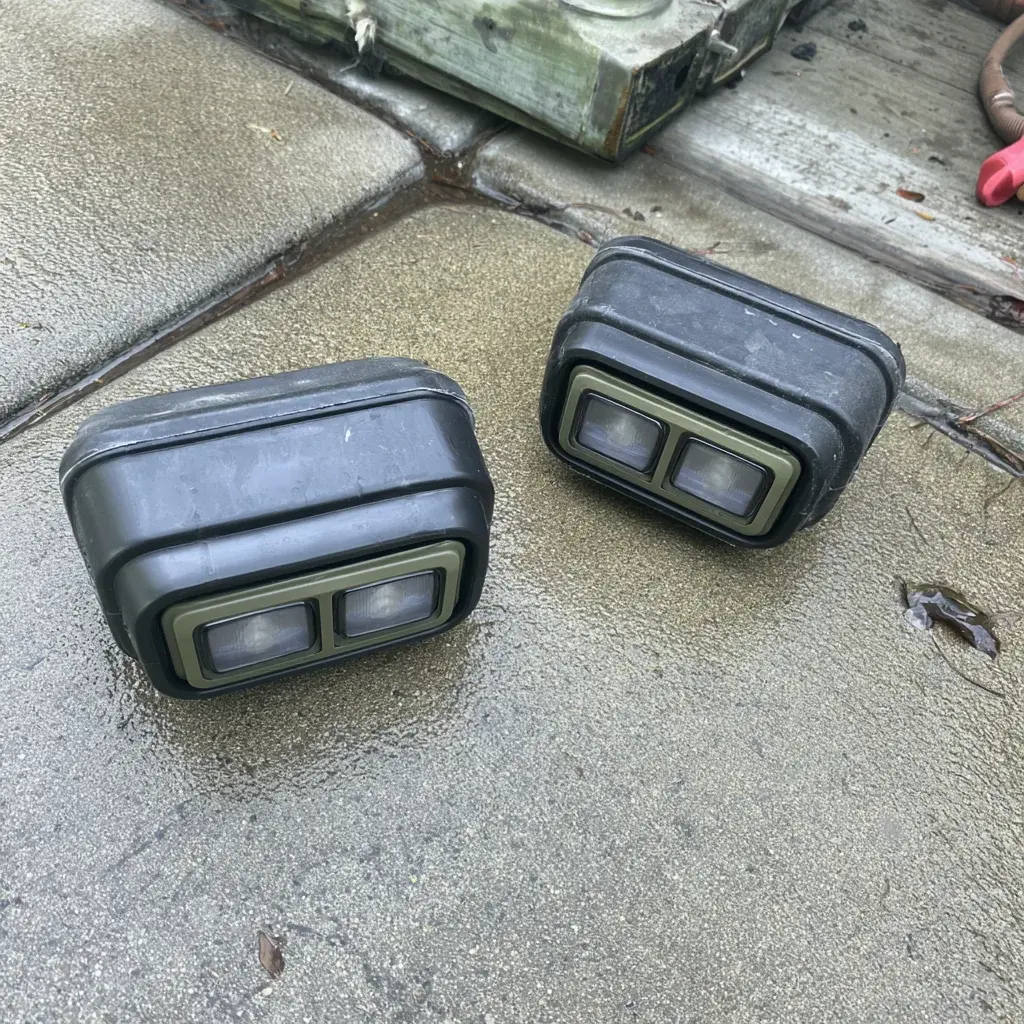
Both photo eyes lit steady before the door ever closes.
A Carlsbad garage door that stops halfway down, then bounces back up, usually isn't broken at all. Somewhere along the bottom of the track, the two small photo eyes have drifted out of alignment, one bumped by a stored bike or a knocked bracket, the other blinded by afternoon sun glare through the driveway. These sensors exist because of UL 325 entrapment protection rules dating to 1993. Getting both LEDs lit steady, not blinking, is a five-minute fix most homeowners can check themselves before calling anyone.
Carlsbad garages sit at grade on slab foundations, so these sensors live low, right where a rake, a surfboard, or a stray soccer ball in a Calavera Hills driveway can tap the bracket loose. Salt air off the coast near Terramar or Ponto can also work a mounting screw free over time. The licensed pros we connect you with check bracket angle, wiring, and lens grime, then confirm both eyes hold a solid light before the door ever closes on its own again.
Whether you're in Rancho Carrillo, Poinsettia, The Foothills, or elsewhere around Carlsbad, safety sensor alignment is arranged around the conditions on the ground in and around Carlsbad, so the plan fits the building rather than a template.
Nearly all of this work is residential: residential garage door repair covers the approach for houses, while commercial and multi-unit buildings are handled under commercial garage door repair.
A Carlsbad garage door that dips toward the slab, then jerks back up before it ever touches concrete, is not a broken opener. It is the photo eye pair near the floor disagreeing about whether the path is clear. One lens sees a clear line across the opening, the other does not, and the opener treats that mismatch as a reason to stop. Homes in Bressi Ranch and Robertson Ranch with newer openers show this most, since the pair triggers instantly.
Kneel down and check both photo eyes at once. Each should show a solid LED, not a blink or a slow pulse. When one glows steady and the other flickers or stays dark, the pair has stopped agreeing, and an opener built to UL 325 won't close a door on a disagreement like that. In Bressi Ranch or Rancho Carrillo garages, that mismatch usually traces back to one bracket, not the whole sensor.
A door that closes fine once the sun drops but balks around midday is telling you where to look. Low winter sun off the Pacific can shoot straight down a garage that faces west, washing out the receiving eye at exactly the wrong angle. Homes along Carlsbad Boulevard or open to Coast Highway 101 see this more, since nothing blocks the glare before it hits the sensor.
Check both LEDs for a steady light instead of a blink, then look at each bracket for movement and each lens for dust, cobwebs, or a hazy film. Driveways near Batiquitos Lagoon and other damp, shaded lots tend to build grime on the lens faster than sun-baked ones.
The pros wipe salt film off both lenses first, since haze alone can mimic a bad sensor. Then they loosen the bracket screws just enough to true up the angle without leaving the mount loose enough to wander again on the next bump.
With the screws backed off, the pros walk each bracket until both LEDs hold steady with no flicker, checking the angle against any low sun crossing the driveway at that hour before locking the screws back down.
Each sensor wire gets a visual check from the bracket back to the opener head, looking for a strand pinched under a roller or worn thin against the rail edge, since a damaged wire will undo the alignment within days.
Carlsbad's older Barrio and Olde Carlsbad garages often had openers added years after the door itself, so the sensor pair got mounted onto whatever bracket fit at the time, sometimes low enough to catch a bike tire or a trash can on the way past. Newer La Costa Greens and Aviara builds mount them cleaner, but salt air off the coast still works into the wiring over time.
The photo eye pair on a Carlsbad garage door is not optional trim; it is entrapment protection built into the opener under UL 325, the standard covering residential opener safety since 1993. Any opener sold or installed here carries this pair wired in from the factory, mounted low on both sides of the track. Nothing about the coastal climate or a slab foundation changes that requirement, and no local variance exists to skip it.
Sea breeze off the lagoons carries salt air that dulls the photo eye lenses on both sides of a Carlsbad garage door, and sun glare through an unshaded stucco entry can wash out the LED signal between them. A hose bump, a leaning bike, or a shifted bracket in an Aviara or Bressi Ranch garage tips the beam off its partner. UL 325 has tied entrapment protection to this sensor pair since 1993; realigning both eyes so the LEDs read steady, not blinking, restores that protection instead of leaving it guessed at.
These are estimated ranges for safety sensor alignment in Carlsbad. Confirm the visit charge and written scope directly with the licensed pros we connect you with.
| Signs To Watch For | Likely Cause | What The Fix Involves |
|---|---|---|
| A door that will not fully close and drifts back open usually is not broken at all. It is a sensor near the floor deciding something is in the way. Clearing the lenses of dust or grit and rechecking the alignment resolves most of these calls before any part gets replaced. | Track alignment, bolt torque check, panel dent look-over for sun-faded doors | an estimated $95–$305 |
| A door can work fine for months, then quit mid-cycle with no warning. That moment often marks a spring finally losing its tension or a cable letting go after slow wear. There is usually no gradual complaint before the failure, just one lift that does not finish. | Extension spring pair swap, pulley check, safety cable install | an estimated $110–$435 |
| A dented panel is the damage you see from the driveway. A spring losing tension is the damage you don't, and it decides whether the door drops on someone reaching underneath it. | Panel section swap for dent or crack, matching hinge and bolt reset | an estimated $165–$695 |
| A door that starts groaning instead of rolling smooth isn't asking for oil. That sound usually means a roller or hinge is already grinding metal against metal, and it won't quiet down on its own. | Full door and opener replacement, old panels hauled away | an estimated $260–$1155 |
The number depends on which part failed and whether the rest of the system still runs true. A worn part on an otherwise balanced door is a narrow fix. The same part failing on a door that already binds or leans usually means more than one thing needs attention before the price is final.
Almost always a sensor problem, not a spring or opener fault. If the LEDs are not both solid, the opener treats the doorway as blocked and refuses to close, or reverses right back up. Check for a bracket knocked loose near a bike or bin, a hazy lens from salt air, or low sun glare hitting the receiver straight on around sunset in a west-facing Carlsbad driveway.
Both sensors sit low, about six inches off the slab, one on each side of the opening where the door lands when closed. On a garage in Kelly Ranch or Sunny Creek, that puts them right where a garden hose, a stack of moving boxes, or a leaf blower is most likely to catch a wire or knock a bracket a few degrees out of line.
You can loosen a bracket to fix the angle, but disconnecting the sensor pair so the door closes without them is not something to attempt. This pair exists specifically to keep a closing door from coming down on something in its path, and the opener is built around having both lenses active. If one keeps failing, the wiring or the mount needs attention, not removal.
Yes. A driveway in Terramar or Hedionda Point that faces west can catch low sun directly on one lens in the late afternoon, enough to overpower the LED signal and make the opener think the beam is broken. It reads the same as a real obstruction to the door, so it reverses or refuses to close, even with nothing near the slab.
Start by wiping both lenses down, since salt air off the coast leaves a fine film that builds up faster near the beach than it does further inland. Then check that neither bracket has been bumped loose by a bike, a hose reel, or gear leaned against the track. Those two checks resolve a large share of calls before anyone touches the wiring.
Ask whether the appointment includes tracing the sensor wiring back to the opener head, not just retightening the brackets, since a pinched or chafed wire further down the track will cause the same symptoms again within weeks. Also ask whether they will test the door through a full open-close cycle afterward, not just check that both LEDs are lit.
The estimated guide range for safety sensor alignment in Carlsbad is $109–$289 for this work. The licensed pros we connect you with must confirm the actual scope and charges directly.
A door that's been repainted more than once often hides a panel that was swapped years ago and never quite matched. It still opens fine. It just tells a different story than the rest of the door if you look close.
A Carlsbad garage door that rises a few inches and stalls is usually a safety sensor, a spring losing lift, or a limit setting off, not a dead opener.
Read article
A Carlsbad garage door that won't budge, with the opener straining or clicking, usually points to a broken torsion spring rather than a motor problem, and it has a clear stop point for safety.
Read articleThis particular failure turns up often enough around Carlsbad to walk through on its own instead of burying it in a longer list. It tends to trace back to one part, one kind of wear, or one habit of the door itself, and knowing that before a call saves a homeowner from describing the same thing three different ways. The licensed pros we connect you with can usually confirm it from a description alone.
Call (760) 392-8678