A garage door in Carlsbad that refuses to lift, or lifts an inch and quits, is usually pointing at the torsion spring above the opening. That spring stores the tension that offsets the door's weight, and the opener motor was never built to lift a heavy slab-mounted door on its own. When the spring gives out, the motor strains, the door stalls, and homeowners from Olde Carlsbad to La Costa Oaks hear the same grinding attempt to climb.
What The Spring Actually Does
A garage door in Carlsbad depends on a torsion spring mounted above the opening, or two extension springs above the upper track, to carry almost all the panel weight. The opener motor only adds a little force to start the roll. Once a spring snaps, that support disappears, and the door can feel stuck, refuse to lift, or drop hard if someone forces it by hand. This holds true whether the garage sits in Aviara or Olde Carlsbad. Never try to lift a door with a broken spring yourself.
Signs Point To A Broken Spring
A snapped spring often announces itself before the door quits altogether. Listen for a sharp bang from the garage, sometimes mistaken for a dropped tool or a car backfiring outside on Carlsbad Village Drive. The door may sag unevenly, one side lower than the other, or refuse to catch when the opener button is pressed. Cables can also go slack once tension disappears, which changes how the panels sit in the track.
Do Not Force The Opener Again
Running the opener repeatedly against a broken spring pushes strain onto parts that were never designed to carry it alone, including the drive gear, the belt or chain, and the cables running down each track. Continuing to press the button after the door stalls can strip the gear or snap a cable next, turning a single-part repair into a longer one. Once a door stops partway and will not continue, that is the point to stop pressing the button.
Why Two Springs Fail Unevenly
Most Carlsbad garages with a standard double door run two torsion springs side by side, and they rarely wear out on the same day. One spring often carries slightly more cycling than the other depending on how it was wound at installation, so a homeowner may notice the door pulling to one side before a full break happens. That lopsided lift, more than any grinding noise, is frequently the earliest sign one spring is close to giving out.
Salt Air Speeds Up Spring Wear
Garages near Tamarack Point and South Beach sit close enough to the ocean that salt-laden air settles on exposed metal parts faster than it does further inland. A torsion spring coated in a thin layer of surface rust loses some flexibility before it ever visibly cracks, and that stiffness adds fatigue with every cycle. Homes closer to the coast in Carlsbad tend to see springs give out somewhat sooner than similar doors in La Costa Oaks or Rancho Carrillo further from the water.
Cycle Count Wears Springs Down
Torsion springs are rated for a set number of open-close cycles, typically somewhere around ten thousand, and that number gets used up faster in a household that runs the garage door multiple times a day. A door original to a home built in the Calavera Hills or Robertson Ranch era, still running its factory spring decades later, is well past the point where a break should be a surprise. Age alone, not any single event, is often the real cause.
Manual Lifting Adds Real Risk
With a broken spring, some homeowners try lifting the door by hand to get a car out before a repair happens. A double door without spring support is heavy enough that lifting it unevenly can pull it off a track or drop it suddenly if a grip slips. Anyone in Carlsbad dealing with this should treat that manual lift as a short, careful, two-person task at most, done slowly, and only long enough to clear the opening once.
Old Cables Fail Around The Same Time
The cables that run from the bottom corners of the door up to the drums on the spring shaft take on extra load the moment a spring breaks, since they are now holding position without the spring's counterbalance behind them. A cable that was already fraying from age can snap under that new strain within days of the spring failure. That is one more reason a door that has stalled should stay parked exactly where it is rather than get forced further.
Checking Before Anything Gets Touched
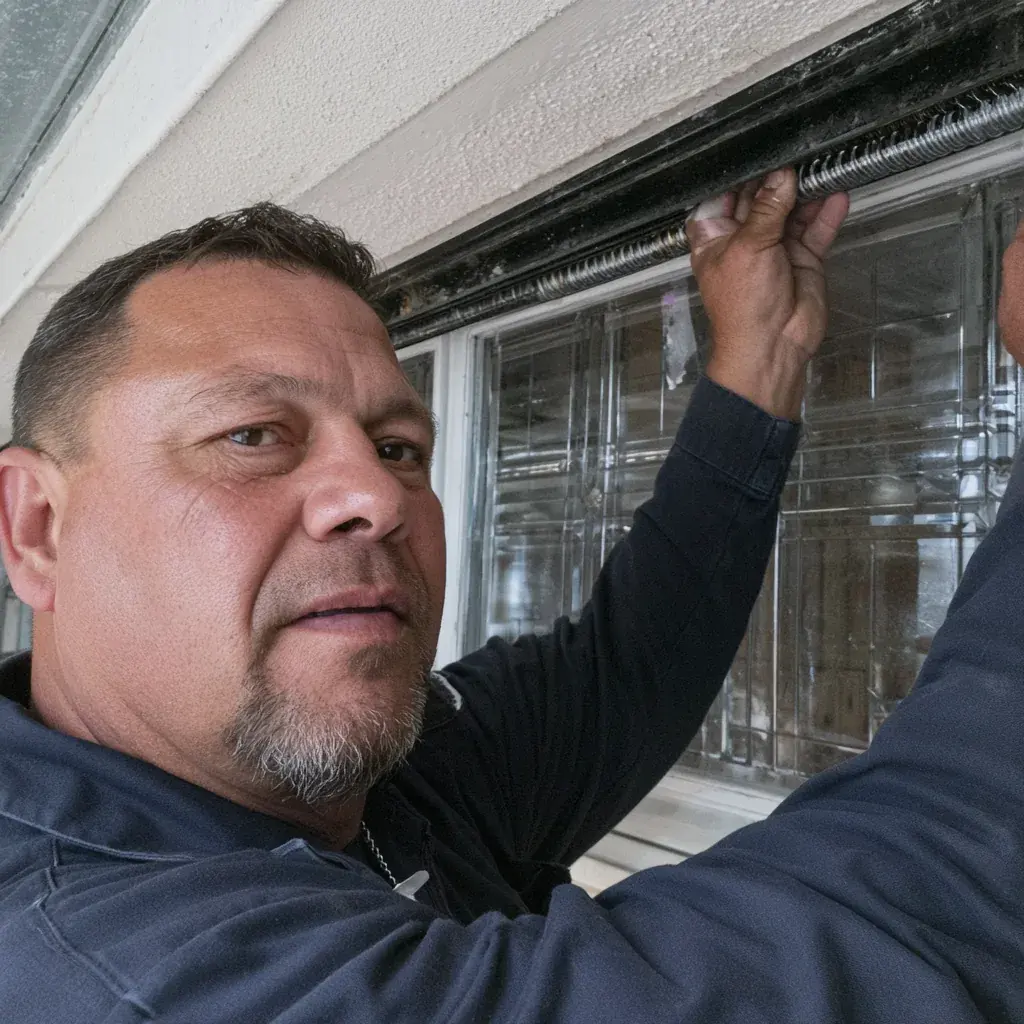
Look at the shaft above the door for a visible gap in the coiled spring, usually near the center where it separates cleanly when it breaks. Check whether the door sits level in the track or leans toward one side, and listen for whether the opener motor is straining without the door actually moving. None of this requires touching the spring itself. The goal is only to confirm what is wrong before deciding what happens next.
Why This Is Not A DIY Fix
A fix means replacing the spring under controlled tension, not loosening the wrong bolt and hoping for the best. Winding cones hold enormous stored force even on a standard residential door, and releasing that force with the wrong tool has hurt people who assumed it was a simple swap. This is where a homeowner in Rancho Carrillo or Calavera Hills should stop and call the licensed pros we connect you with instead of continuing.
What Happens After A Call
Before that call, a few checks are still safe from outside the spring area. Confirm the opener has power, check that nothing blocks the photo-eye sensors near the track base, and see whether the door moves at all by hand with the opener disconnected. If it barely lifts a few inches before stopping, the spring is almost certainly the reason, whether the garage sits in Poinsettia or closer to Agua Hedionda Lagoon.
Dealing with this in your home?
Carlsbad runs on marine layer, and it settles heaviest where El Camino Real cuts inland past the Carlsbad Research Center — tracks there hold moisture longer than a beachfront door in Terramar ever will. Rollers gum up with sandy grit blown off Tamarack Point. A garage that stuck shut this morning usually points to one or the other, not a worn opener.