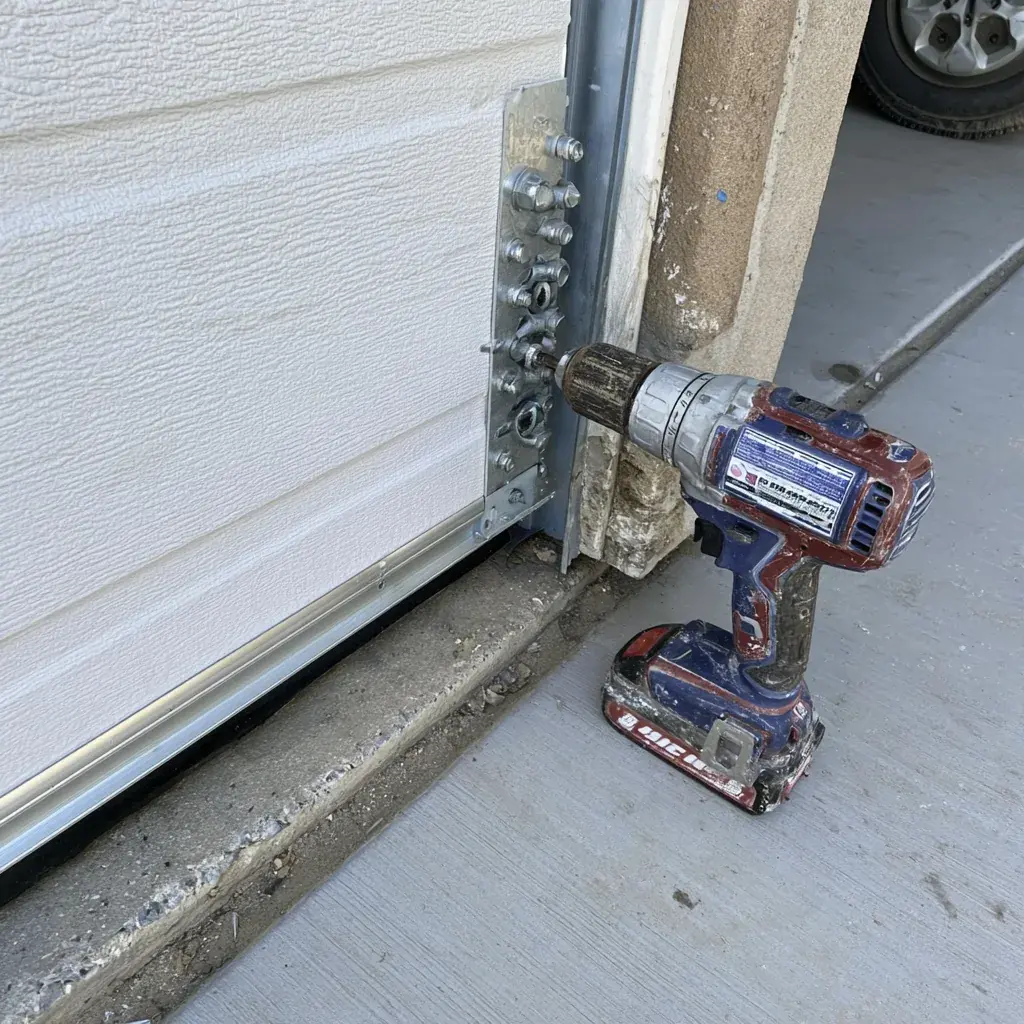
What To Expect When You Book in Carlsbad, CA
What actually happens once a Carlsbad garage door repair visit is booked, from arrival to the final safety check.
A visit opens with the arrival window, then the opener is unplugged and the door lifted by hand to find the real fault, followed by a written estimate before repair and safety tests at the end.
The Four Stages
A garage door visit in Carlsbad follows a set pattern, whether the house sits in Olde Carlsbad on a 1960s slab or in a newer La Costa Oaks build. Four stages carry every job: arrival and inspection, a manual test of the door itself, a plain explanation of what broke, and a written number before any tool comes out. Reading through them below removes most of the guesswork.
The pro who arrives will not run the opener at all until the door has been checked by hand. That single habit separates a careful visit from a rushed one, and it matters more in Carlsbad than the address might suggest, since salt air off the coast quietly weakens hardware that still looks fine from across the garage.
- The pro parks near your driveway, confirms the address, and asks what the door was doing before it stopped. Then the opener gets unplugged or disconnected, since motor power has to be off before anyone touches springs, cables, or a track that might already be under tension.
- With the opener off, the door gets pulled up and let down by hand. This shows whether the springs are still carrying the weight, whether a cable has slipped, and whether the track is bent, gritty with sand, or simply out of alignment.
- Whatever the hand test turns up gets described out loud, in terms that don't require a mechanical background, before any price is put in writing. A worn part gets named, a bent piece gets pointed out, and the reasoning behind the fix gets laid out so nothing is a surprise later.
- Repair and testing: the work is done, the opener is reconnected, and the door is run through its final safety checks before the pro leaves the property.
What a Fair Written Quote Contains
A written estimate is the record that protects both sides once the door is back down and the springs are under tension again. In Carlsbad it should read like a short, plain list rather than a paragraph, because a plain list is what a homeowner in Olde Carlsbad or Bressi Ranch can compare against a second opinion without needing anyone to translate it.
- The specific part being repaired or replaced, named plainly rather than folded into a single vague line item on the page.
- The finding that led to the recommendation, written in the same plain terms the pro used out loud in the garage.
- A single total price for the job, not a range that leaves room to move once the door is already disassembled.
- Whether the visit itself is included in that total or billed on top of it, stated clearly instead of left for the homeowner to ask about.
- Any part of the door or track the pro flags as worth watching but is not recommending repair for on this particular visit.
- A fair quote lists the part being replaced, the labor involved, and the total before any tool touches the door. It names the brand or grade of spring or opener going in, so a Carlsbad homeowner can compare it against a second call if they choose.
If Something Is Not Right
Almost every garage door repair in Carlsbad goes exactly as quoted, but a homeowner should still know what a problem visit looks like. The clearest sign is a verbal number that changes once the work has started, or a part swapped that was never mentioned on the estimate handed over before the door was touched.
If that happens, the fix is to stop the work and ask for the estimate to be revised in writing before anything else is done, the same as you would with any licensed trade working on a home near Palomar Airport Road or Rancho Carrillo. A fair pro will not object to that pause, because the estimate was supposed to cover the job either way.
- Ask the pro to point to the exact line in the written estimate that changed and why. A hidden second spring, a rusted track bolt, or rot at the jamb are reasons that hold up; a vague answer does not.
- A homeowner can say no to added work and only pay for what was quoted at arrival. The door can be left as found, or closed and secured, while a second opinion is arranged from another licensed pro.
- Keep the written estimate and any photos the pro took of the spring, track, or panel. If a charge past that number can't be explained in plain terms, that paperwork is what a complaint or chargeback relies on.
The visit, start to finish
- The visit runs in order: arrival, hand-lift inspection, written finding, then repair and safety tests, never repair before a number is on paper.
- The opener gets unplugged before anything else so the door's own weight and balance, not the motor, show what is actually wrong.
- The written estimate is the number that holds for the whole visit in Carlsbad; a change mid-repair should be explained before work continues.
- Auto-reverse, balance, and opener force are tested last, after the repair, because they confirm the fix rather than diagnose the problem.
- A homeowner near Aviara or Bressi Ranch can ask for the same walkthrough regardless of neighborhood or HOA rules on visible garage work.
- Nothing here covers what a repair costs or how to schedule one; those live on separate pages, not in this walkthrough.
Frequently Asked Questions
How long does a repair visit actually take?
The arrival window is when the pro shows up, not when the job finishes; a spring swap and a full track realignment take different amounts of time. In Carlsbad, expect the visit itself, from arrival to the door closing on its own tracks again, to run from under an hour to most of an afternoon depending on what is wrong.
Why disconnect the opener before checking the door?
The opener is disconnected first because it can mask a bent track or a failing spring by forcing the door through a fault that the motor is strong enough to push past. Lifting the door by hand shows the pro exactly where it binds, drags, or drops, which is the real starting point for any diagnosis in a Carlsbad garage.
Can the price change once the repair starts?
No. A fair estimate is written down before the repair starts, and it should stay the reference point for the whole visit. If a Carlsbad homeowner is told a new number partway through, that is the moment to ask why, not the moment to simply agree because the door is already apart.
Why do safety tests happen at the very end?
Safety tests happen at the end because they confirm the finished repair, not the diagnosis. The auto-reverse function, the balance of the door, and the force settings on the opener all get checked after the last bolt is tightened, which is standard for garage door work anywhere in Carlsbad and the rest of San Diego County.
Questions about your repair visit?
This page covers the repair visit itself, not pricing or scheduling, which are handled elsewhere on the site.
Call (760) 392-8678