You hit the button leaving for the 5 near Palomar Airport, or heading out of a driveway in Bressi Ranch, and the door creeps up a few inches, then just stops. The motor is still running. Nothing looks broken. You try again and get the same short lift, like something invisible is holding the bottom of the door down against the slab in Carlsbad.
What A Short Lift Means
An opener that stops early is almost always following a rule it was built to follow, not failing at random. Chain and belt drive openers use a travel limit and a force setting to decide how far to pull and how hard to fight resistance. When the door rises a short distance and quits, the opener has already decided something is wrong and stopped on purpose.
Limit Setting Vs Force Setting
A limit problem means the opener thinks the door is fully open after just a few inches of travel, so it stops the motor and holds there. A force problem means the opener is meeting resistance it was set to treat as an obstruction, so it cuts power to avoid straining the motor. Both look the same from the driveway. They are adjusted differently and often confused.
When Springs Are The Real Cause
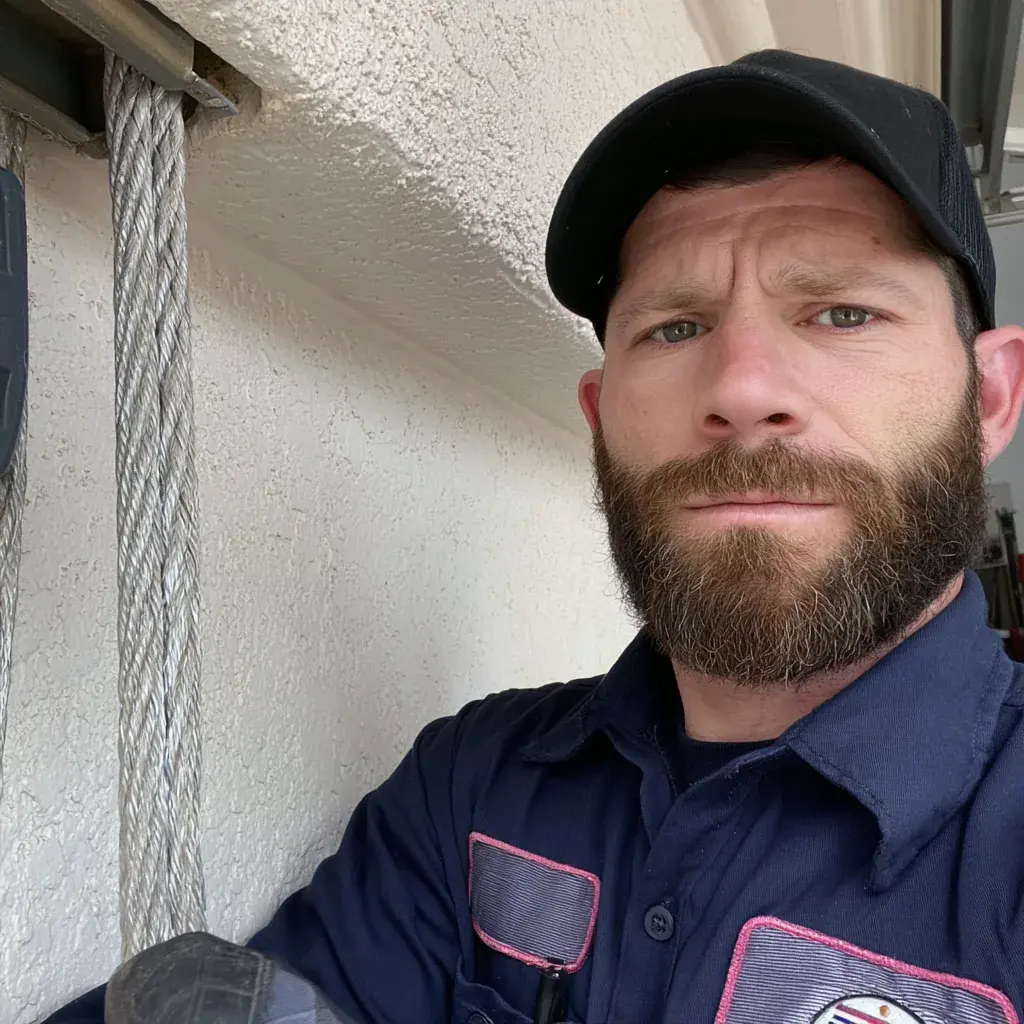
A door that rises squarely usually opens all the way. One that lifts a few inches and stops, tilted to one side, points to a single cable off its drum, not both. Carlsbad garages carry two cables on a torsion setup, and they should move together. When only one lets go, the opener still pulls, but the low corner drags against the frame and the safety sensors or gear inside will not let it go further.
Sensors That Trigger A Stop
Two photo-eye sensors sit low near each side of the track, usually a few inches off the garage floor. If one sensor is misaligned, dusty, or catching a stray beam of sun through a window in a Robertson Ranch or Calavera Hills garage, the opener treats that as an obstruction in the doorway and refuses to lift the door past a few inches.
Sandy Grit In The Track
Sandy grit tracked in from a beach day at Tamarack Point or South Ponto Beach settles into the track and rollers over time. That buildup adds drag right where the door needs to glide smoothly. The opener senses the extra resistance within the first few inches of travel and stops, mistaking dirty hardware for a blocked door.
Why Repeated Tries Make It Worse
Hitting the button again and again after a short stop does not clear the cause, it just repeats the same failed lift. If a spring has lost tension, each attempt forces the opener's motor and gears to carry weight they were never built to carry alone. That strain adds up on the motor gears, not on the spring, and it shortens the life of both.
Checking The Photo Eyes Yourself
Trying the opener again after the first stop does not help. It shoves the sagging corner into the door frame or the rail edge instead of letting the panel travel straight. Track can bend from that in a few tries, and a bent section near La Costa Avenue or anywhere else in Carlsbad has to be swapped, not hammered back into shape. Stop after the door hangs crooked once and leave the remote alone.
What Not To Adjust Yourself
A door stuck a few inches up is still tethered to a spring under load, whether the setup is torsion or extension. That tension does not release on its own; it sits there, coiled, waiting for a nudge. Homes in Olde Carlsbad with older torsion hardware carry this risk longer, since aging cable strands or a worn drum can let go without warning. Treat the gap as a hazard, not a shortcut for pulling boxes out of the garage.
Openers Aging In Coastal Air
Salt air drifting in from South Carlsbad State Beach and the coastal fog that settles over neighborhoods like Terramar and Olde Carlsbad can corrode opener contacts and drive-gear components faster than an inland climate would. A short-stop pattern that shows up gradually over a few weeks, rather than overnight, often points to an opener nearing the end of its working life.
What A Fix Usually Involves
Sorting out a short stop starts with ruling out the photo eyes and clearing the track, then testing the spring balance by hand with the opener disconnected. If the door feels heavy or uneven when lifted manually, the spring is the cause and needs proper tension work, not an opener adjustment, which is where the licensed pros we connect you with take over safely.
When To Stop Trying It Yourself
Stop once you have checked the sensors and the track and the door still won't lift past a few inches. Do not loosen anything near the springs or force the door by hand past that point. A door that fights the opener at the same short distance every time is telling you the cause is mechanical, not electrical, and that's a job to hand off.
Dealing with this in your home?
Carlsbad runs on marine layer, and it settles heaviest where El Camino Real cuts inland past the Carlsbad Research Center — tracks there hold moisture longer than a beachfront door in Terramar ever will. Rollers gum up with sandy grit blown off Tamarack Point. A garage that stuck shut this morning usually points to one or the other, not a worn opener.