A homeowner in Rancho Carrillo or off El Camino Real notices the garage door dragging on one side, grinding instead of rolling smooth. Nine times out of ten the cause is not a broken part but sandy grit sitting inside the track itself. Coastal breezes off the lagoons carry fine particles inland, and every open-close cycle grinds that grit deeper into the roller path, turning a five-minute cleaning job into a worn track if it sits too long.
How Grit Gets Into The Track
Carlsbad sits close enough to South Carlsbad State Beach and Tamarack Surf Beach that sandy dust travels on the sea breeze and settles wherever air moves, including an open garage. Landscaping work, dry creek beds near Agua Hedionda Lagoon, and everyday foot traffic add their own share of dust and debris. None of it announces itself. It builds in thin layers along the track lip until a roller finally catches on it.
What Grinding Sounds Actually Mean
A dry scraping noise usually means grit is acting like sandpaper between the roller and the track wall. A softer grinding hum points to grit packed into the roller bearing itself, which wears faster and costs more to replace. A door that shudders partway up often has a buildup thick enough to physically block the roller's path for a moment before it forces through. Each sound tells a homeowner in Aviara or Bressi Ranch roughly where to look first.
Checking The Track Yourself
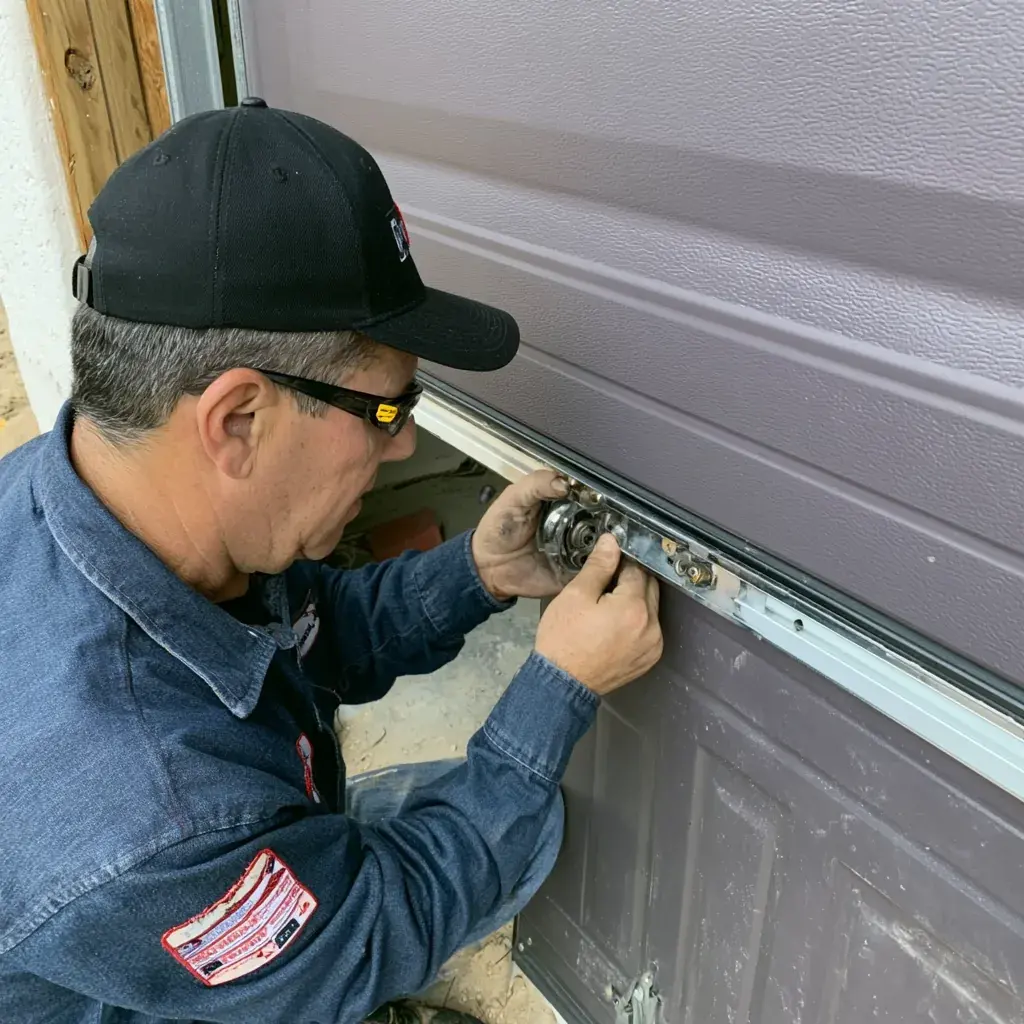
With the door closed and the opener unplugged, run a finger along the inside track lip where the rollers ride. Grit feels like fine sandpaper rather than smooth metal. Look for a pale gray or tan film, especially near the bottom few feet of track closest to the slab, since that section takes the most airborne debris. A flashlight held at a low angle makes buildup easier to spot than overhead garage light.
Cleaning It Out Safely
A dry rag or soft brush removes loose grit without pushing it deeper into the track channel. A shop vacuum with a narrow attachment lifts what a rag leaves behind. Avoid spraying water directly into the track since it can carry grit into the roller bearing rather than out of it. Skip compressed air near the springs or cables entirely, since a stray blast can dislodge tension gear that should only be handled by someone trained for it.
When Grit Has Already Done Damage
Beach sand behaves differently than yard dust. It carries salt, and salt draws moisture even under a marine layer that never quite turns to rain. That mix packs into the bottom track section on garages near Tamarack Point or South Beach and turns from loose grit into a gummy paste. A door that rolls fine in Bressi Ranch can drag hard a few miles closer to Carlsbad Boulevard for exactly this reason, not a spring or opener problem at all.
Rollers Wear Faster With Grit
Nylon rollers common on newer Carlsbad installs handle grit better than the older steel rollers still found in parts of Olde Carlsbad, but neither is immune. Grit works into the roller's center bearing and grinds away the lubricant meant to keep it spinning freely. A roller that has stopped turning and instead slides along the track, leaving a worn flat side, has usually been fighting packed grit for months before anyone noticed the noise.
Weatherstripping Lets Grit In Too
A cracked or sun-faded bottom seal does more than let in a little draft. It leaves a gap where sand and dust ride the sea breeze straight under the door and settle at the base of both tracks. Homeowners near Ponto or Terramar, closer to the open coastline, tend to see this faster than those further inland in Calavera Hills. Replacing a worn seal cuts down how much grit reaches the track in the first place.
Slab Height Changes Where Grit Sits
Most Carlsbad garages sit on a slab-on-grade foundation, which puts the bottom track right at ground level with nothing lifting it above blowing dust. In older sections built through the 1970s and 1990s, minor settling can leave one side of the slab slightly lower, and that low corner becomes a natural spot for grit and rainwater runoff to collect. A track sitting in that corner clogs faster than the rest of the rail.
How Often To Check The Track
A garage that faces a driveway with regular foot or car traffic collects grit faster than one tucked behind a courtyard. A quick wipe-down every few months keeps most buildup from ever reaching the grinding stage. Homes closer to the coast, from South Beach up toward Hedionda Point, may need to check a little more often simply because the sea breeze carries more fine particulate than inland streets near College Boulevard.
Signs It Is Past A DIY Fix
Clearing it yourself is fine for the bottom two feet of track, reachable with the door down and the opener disconnected. A dry brush first, then a vacuum, then a wipe with a barely damp cloth gets most of it. Do not spray water into the track hoping to flush it, since that just spreads the paste higher. Once grit has worked past the rollers into the shaft or bearings, that is a job for someone who can pull the assembly apart.
Keeping The Track Clear Long Term
Sweeping the garage floor near the tracks, checking weatherstripping twice a year, and wiping the rail lip whenever the door gets an oil check all keep grit from becoming a mechanical problem. Homeowners in newer communities like La Costa Greens or Robertson Ranch often assume a newer build means fewer issues, but grit does not care how old the house is. It only cares how often the track gets checked.
Dealing with this in your home?
Carlsbad runs on marine layer, and it settles heaviest where El Camino Real cuts inland past the Carlsbad Research Center — tracks there hold moisture longer than a beachfront door in Terramar ever will. Rollers gum up with sandy grit blown off Tamarack Point. A garage that stuck shut this morning usually points to one or the other, not a worn opener.