A door that thumps so hard the windows rattle in Bressi Ranch or Calavera Hills is not behaving normally, even if it still opens and closes. Carlsbad homes built from the 1970s onward sit on slab-on-grade foundations, so the shake is not coming from the slab moving. It is coming from something loose or worn in the door assembly itself, and the fix usually starts with a walk around the garage, not a phone call.
Hardware Working Its Way Loose
Every bracket holding the track to the framing carries a jolt each time the door starts and stops. Over years of daily cycles, lag screws back out of the wood a fraction at a time, and a track bracket that used to sit flush starts to flex. That flex is what turns a normal door cycle into a bang that carries through the wall into the house, especially in an attached garage common in Rancho Carrillo and Robertson Ranch.
Rollers Past Their Useful Life
Nylon rollers wear down from years of sandy grit in the track, especially in homes near Carlsbad Boulevard or South Beach where blown sand finds its way into the garage. A worn roller develops flat spots or a loose bearing, and instead of gliding it hops slightly at each hinge point. That hop repeats on every panel as the door travels, and the accumulated jolt is what a homeowner in Aviara or La Costa Oaks feels as a shudder through the floor.
An Opener Chain Or Belt Gone Slack
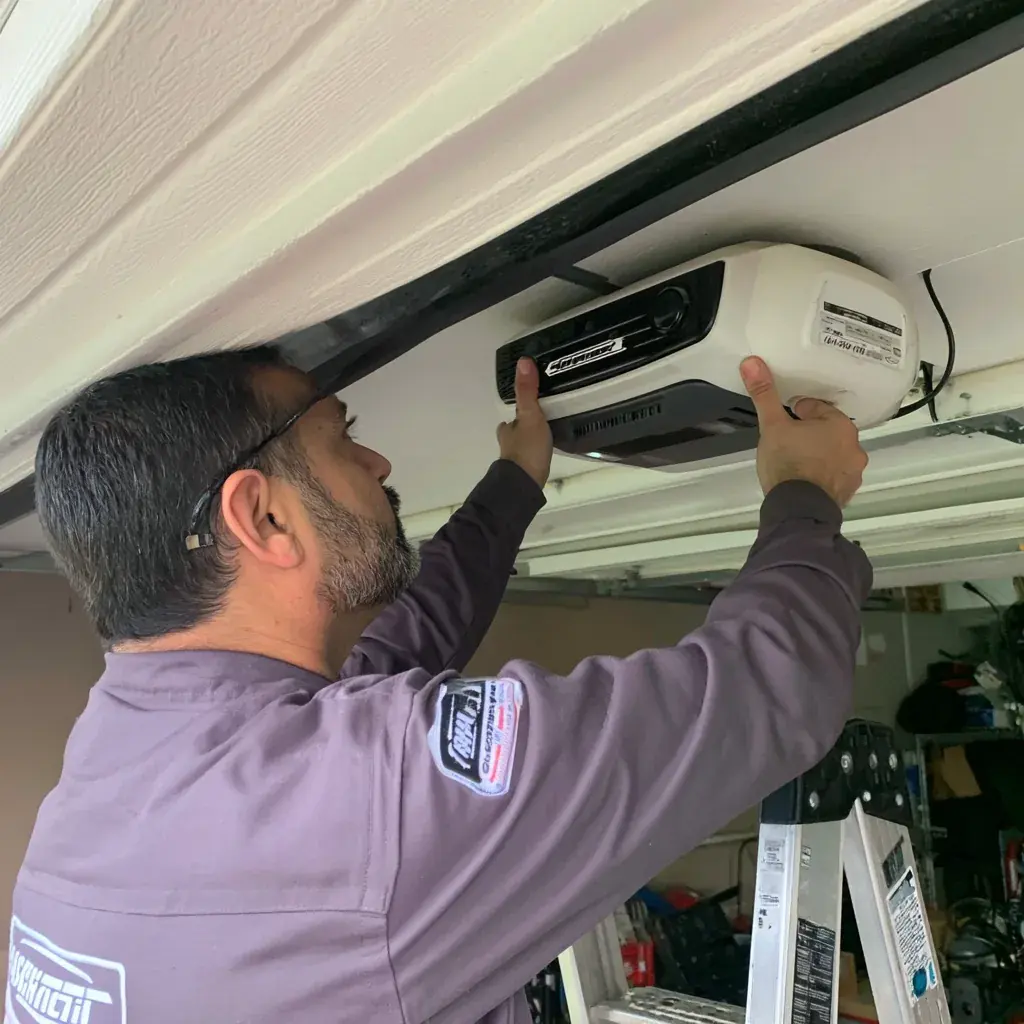
A chain-drive opener that has stretched with age slaps against the rail housing on every start, and that slap transmits down through the mounting bracket into the garage ceiling joists. Homes in Olde Carlsbad with older openers see this more, since the chain has had decades to stretch rather than years. A belt-drive unit rarely does this, which is one reason the shake often points straight at the opener rather than the door panels.
A Bent Or Cracked Track
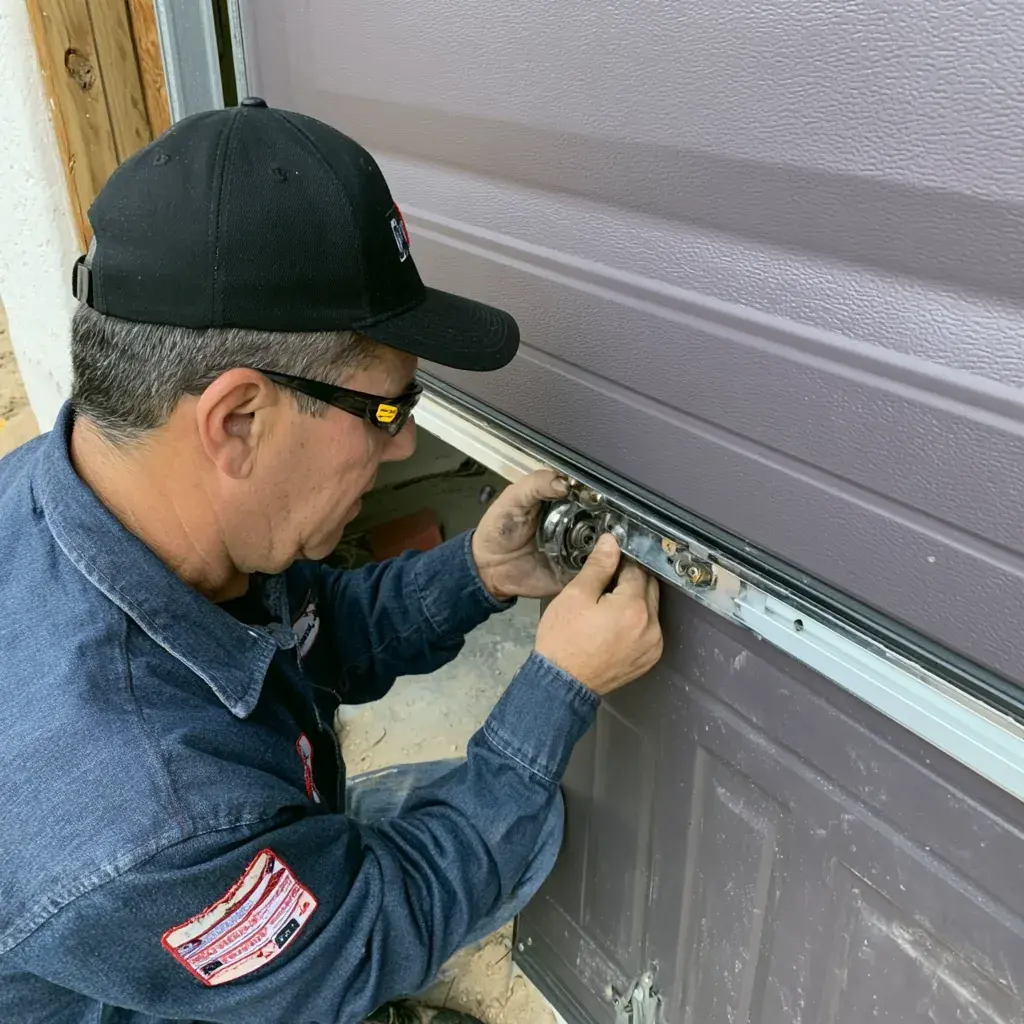
Loose lag screws at the roller brackets let each panel section rattle independently the instant the opener pulls the door up. Walk the track from the floor to the header and grip every bracket by hand. If one turns even a little under light pressure, the wood behind it in that jamb has likely worn soft over years of vibration, and a screwdriver alone will not hold it for long near La Costa Avenue homes with older framing.
Cable Drums Out Of Sync
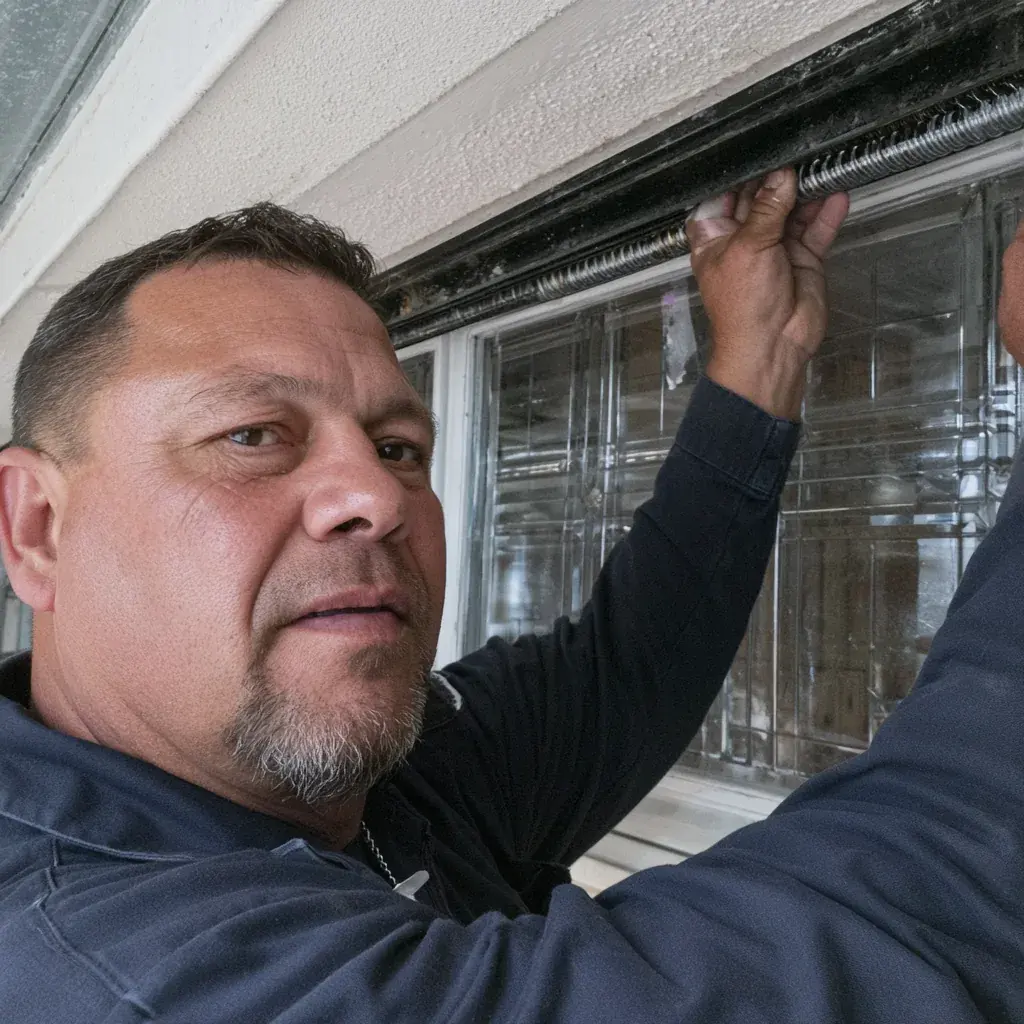
The two cable drums at each end of a torsion shaft are supposed to wind at the exact same rate, keeping the door level as it travels. If one drum has slipped on the shaft, even slightly, one side of the door lifts a beat faster than the other. That mismatch racks the door frame with every cycle, and a Carlsbad garage with an off-level door often shows this as a shake right at the moment the door lifts off the slab.
Springs Losing Their Balance
A spring that has weakened on one side, whether torsion or extension, forces the opener to do more lifting on that half of the door. The motor strains, the door tilts a little as it rises, and the imbalance shows up as a rattle transmitted through the frame rather than a smooth lift. Two-car doors common in Aviara and Rancho Carlsbad carry more weight overall, so an uneven spring there tends to shake harder than on a single door.
Hinges Stretched At The Panel Joints
Watch the door through a full cycle and note where the shaking starts. A rattle that begins right at the floor points to worn hinges or a bent bottom bracket, while shaking that builds near the top usually traces back to the header bracket or a spring losing tension. Homes in Bressi Ranch and Rancho Carrillo built in the same decade often show wear on the same hardware first, since the doors are the same age and see similar daily use.
When The Whole Door Is Out Of Balance
Springs stretched or wound past their working life stop lifting evenly, so the opener drags one side of the door up a beat behind the other. That uneven pull is what most homeowners feel as a shudder through the wall studs near the garage, not a sound so much as a jolt. Older tract homes in Olde Carlsbad on original springs feel this first, since nothing there has been swapped out since the house was built.
Wall Mounting Versus Attached Framing
How much shake reaches the living space depends partly on how the garage is framed against the house. An attached garage sharing a wall with a bedroom in Poinsettia or La Costa Greens carries vibration more directly than a detached structure. This does not cause the shake itself, but it explains why the same loose bracket feels louder in one Carlsbad house than it would in a garage set apart from the main structure.
What Not To Do While It Shakes
Do not keep running the door through cycles once a shake shows up, and do not try to tighten a torsion spring bracket while the shaft is under tension. A cable drum, a wound spring, or a track under a loaded door can move suddenly if the wrong bolt comes loose. The safest step in a Carlsbad garage is to stop, unplug the opener, and leave the door in whatever position it is already in until someone looks at it.
Getting An Answer On What Moved
Most of the causes above look similar from the driveway: a bang, a shudder, a door that still works but feels wrong doing it. Telling a stretched hinge apart from a bent track or an unsynced drum usually takes hands on the hardware while it cycles. If a Carlsbad door has started shaking the house, the licensed pros we connect you with can trace it to the actual part before anything gets worse.
Dealing with this in your home?
Carlsbad runs on marine layer, and it settles heaviest where El Camino Real cuts inland past the Carlsbad Research Center — tracks there hold moisture longer than a beachfront door in Terramar ever will. Rollers gum up with sandy grit blown off Tamarack Point. A garage that stuck shut this morning usually points to one or the other, not a worn opener.