A garage door that squeals every time it opens in Carlsbad is not background noise to ignore. That sound usually means metal parts are running dry or out of alignment somewhere along the track or hinge line. A door near Bressi Ranch or Calavera Hills making that noise today will likely still open tomorrow, but the friction behind the sound is wearing something down with every single cycle it runs.
Squeal Versus Screech
Squealing and screeching are not the same complaint. A squeal is usually a steady, higher pitch tied to rollers or hinges lacking lubrication. A screech tends to be sharper and irregular, often pointing to metal contact where a roller has worn down or a bearing inside the opener or track hardware has started to fail under load rather than simply needing oil.
Check The Rollers First
Start at the rollers, the small wheels riding inside the track on each side of the door. Watch one full cycle and look for a roller that wobbles, sits at an angle, or lags behind the others. A cracked or flattened roller often makes the loudest noise of any part on the door, and it is usually the easiest one to point to once you know where to look.
Inspect Every Hinge
Hinges are the next stop, the metal plates joining each panel where the door folds as it moves. Dry hinge pins squeal at a steady pitch that rises and falls with the door's speed. Check for surface rust too, since a hinge near the coast can hold moisture from the marine layer that plain grease never reaches once it starts to pit the metal.
Look At Track Alignment
Track alignment matters as much as any single part. Stand back and sight down each track from end to end. A section pulled slightly out of line makes rollers scrape sideways instead of rolling straight, and that scraping is often mistaken for a lubrication problem when the real fix is loosening the mounting brackets and resetting the track's angle.
It Might Be The Opener
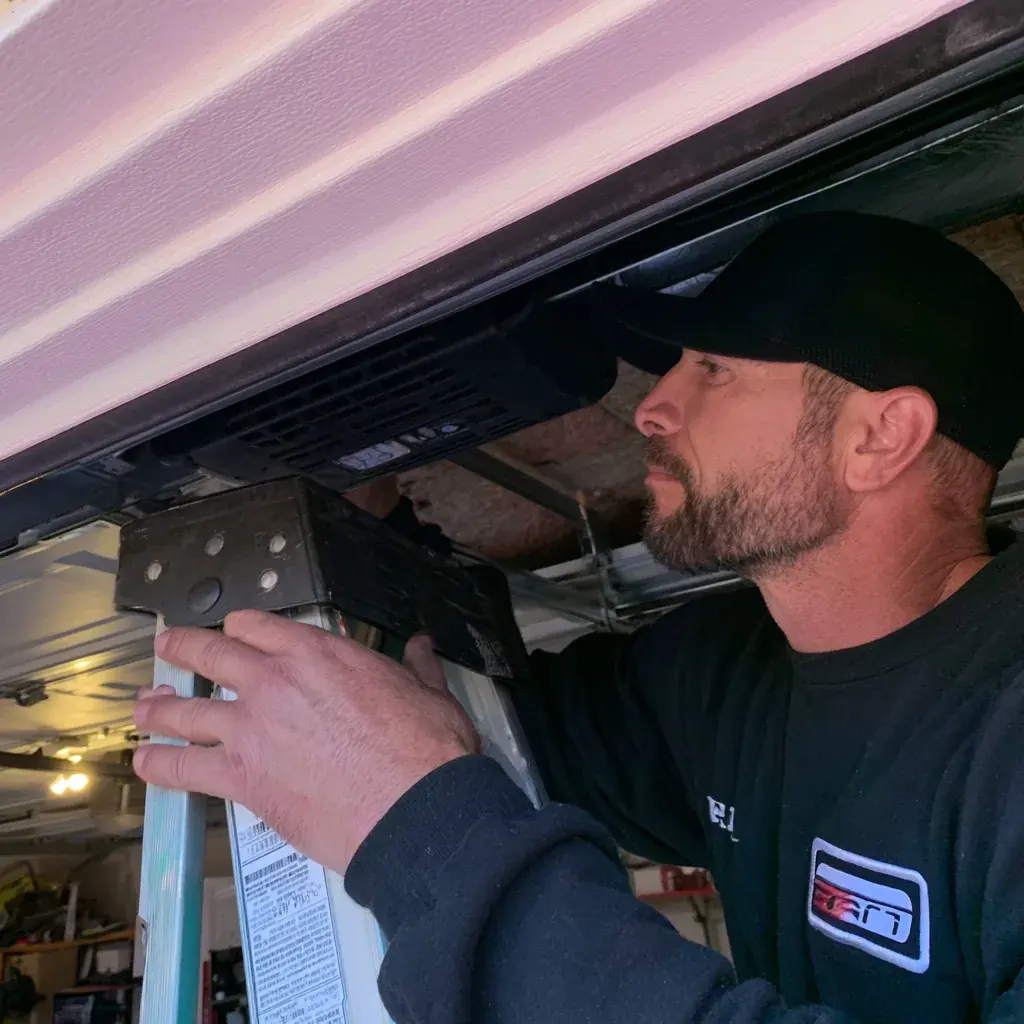
The opener itself can be the source, not the door. A drive gear worn down inside the unit, or a chain or belt running loose, produces a grinding note that carries into the garage and sounds like it comes from the door. If the noise changes when you disconnect the opener and move the door by hand, the opener is the likely cause.
Use The Right Lubricant
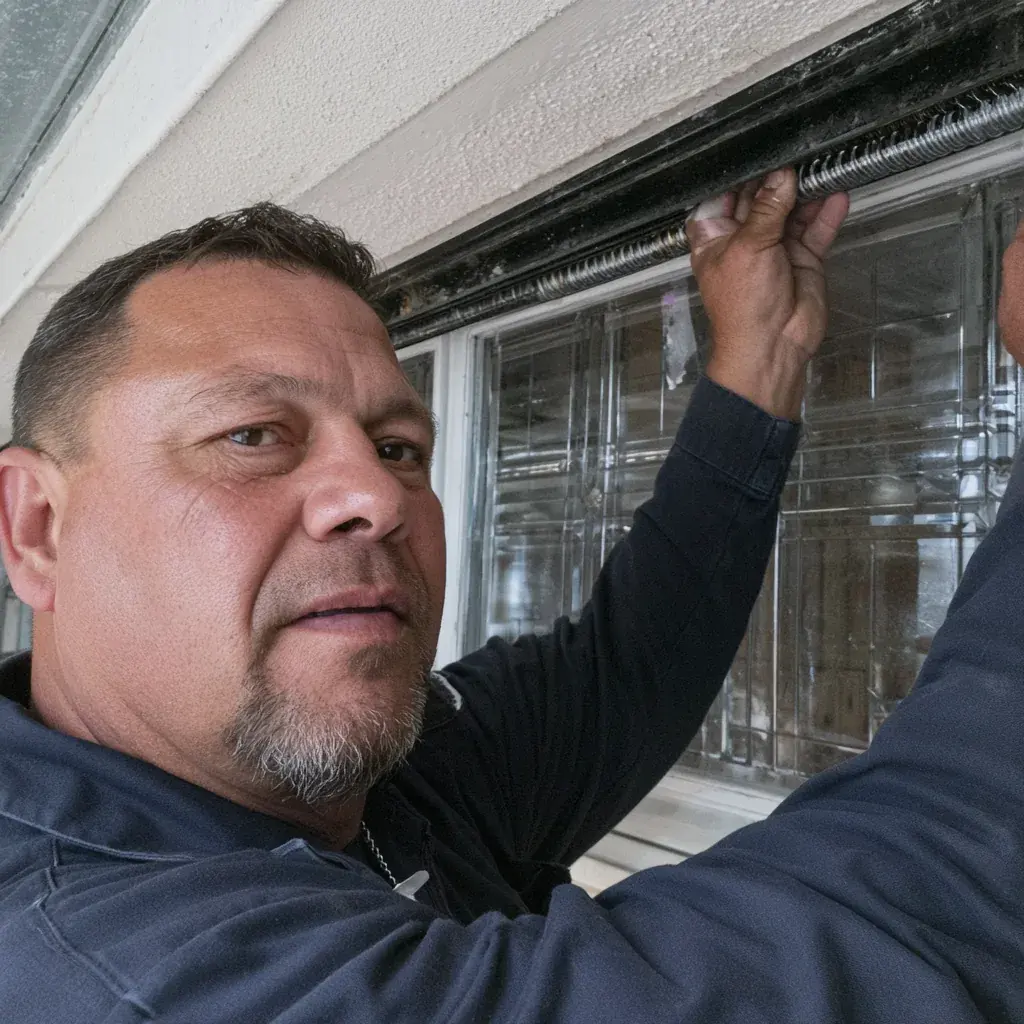
Do not spray a household oil or general lubricant across the whole door hoping it quiets everything down. The wrong product attracts sandy grit from the driveway and turns into a gritty paste inside the track, which grinds the roller surface faster than dry metal alone. A silicone or lithium-based garage door lubricant belongs on hinges, rollers, and the torsion spring coil, and nowhere else.
When To Stop Using It
Stop using the door if the screeching turns into a grinding or metallic clunk on top of the noise, or if the door visibly jerks partway through its travel. That combination often means a roller has left the track or a spring is carrying uneven tension, and running the door again risks a panel jump or a spring failure rather than a simple loud opening.
Salt Air Speeds Corrosion
Carlsbad's coastal air plays a real role here. Salt-laden moisture off the sea breeze settles on exposed hardware faster than it would inland, and a house near Tamarack Point or Terramar can see hinge and roller corrosion years before a similar door in Rancho Carrillo or Calavera Hills, simply from proximity to that air.
After The Door Sits Idle
A door that sat unused for a week or two, common in a golf-community garage in La Costa Oaks or Aviara during a slower travel stretch, often squeals loudly on its first few cycles back. Lubricant settles and dries between uses, and a short burst of noise that fades after two or three openings is usually just that, not a new failure.
Quiet Openers Reveal More
Newer, quieter belt-drive openers make grinding stand out more than it would on an older chain-drive setup, since there is less baseline noise to mask it. A homeowner in Bressi Ranch or Robertson Ranch with a recently installed opener may notice a squeal others would miss, simply because the rest of the system runs close to silent already.
When Grease Is Not Enough
Lubricating hinges and rollers yourself solves plenty of squeals for good. What it will not fix is a cracked roller, a misaligned track bracket, or a worn opener gear, and running the door for weeks hoping the noise fades on its own tends to turn a cheap part into a bigger repair. The licensed pros we connect you with can pull each roller and hinge for a real inspection and replace only what has actually failed.
Dealing with this in your home?
Carlsbad runs on marine layer, and it settles heaviest where El Camino Real cuts inland past the Carlsbad Research Center — tracks there hold moisture longer than a beachfront door in Terramar ever will. Rollers gum up with sandy grit blown off Tamarack Point. A garage that stuck shut this morning usually points to one or the other, not a worn opener.