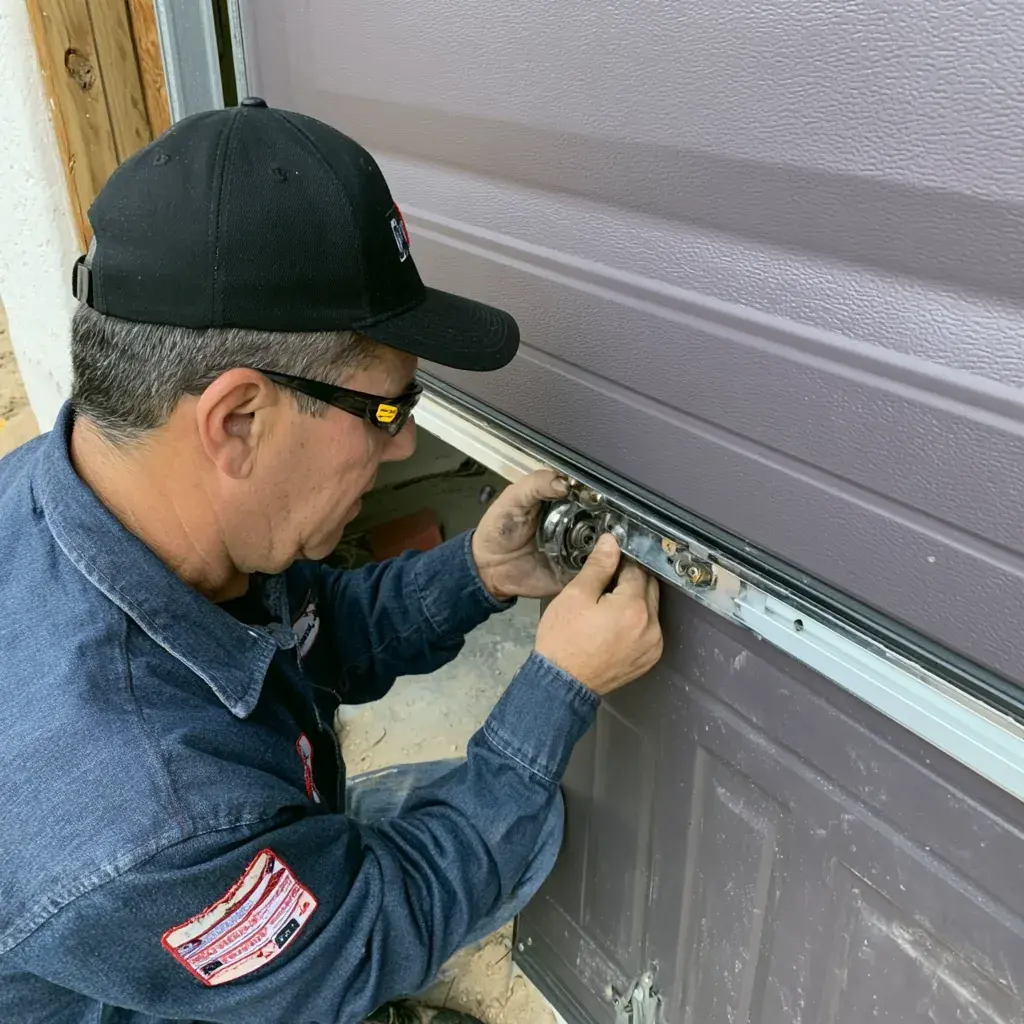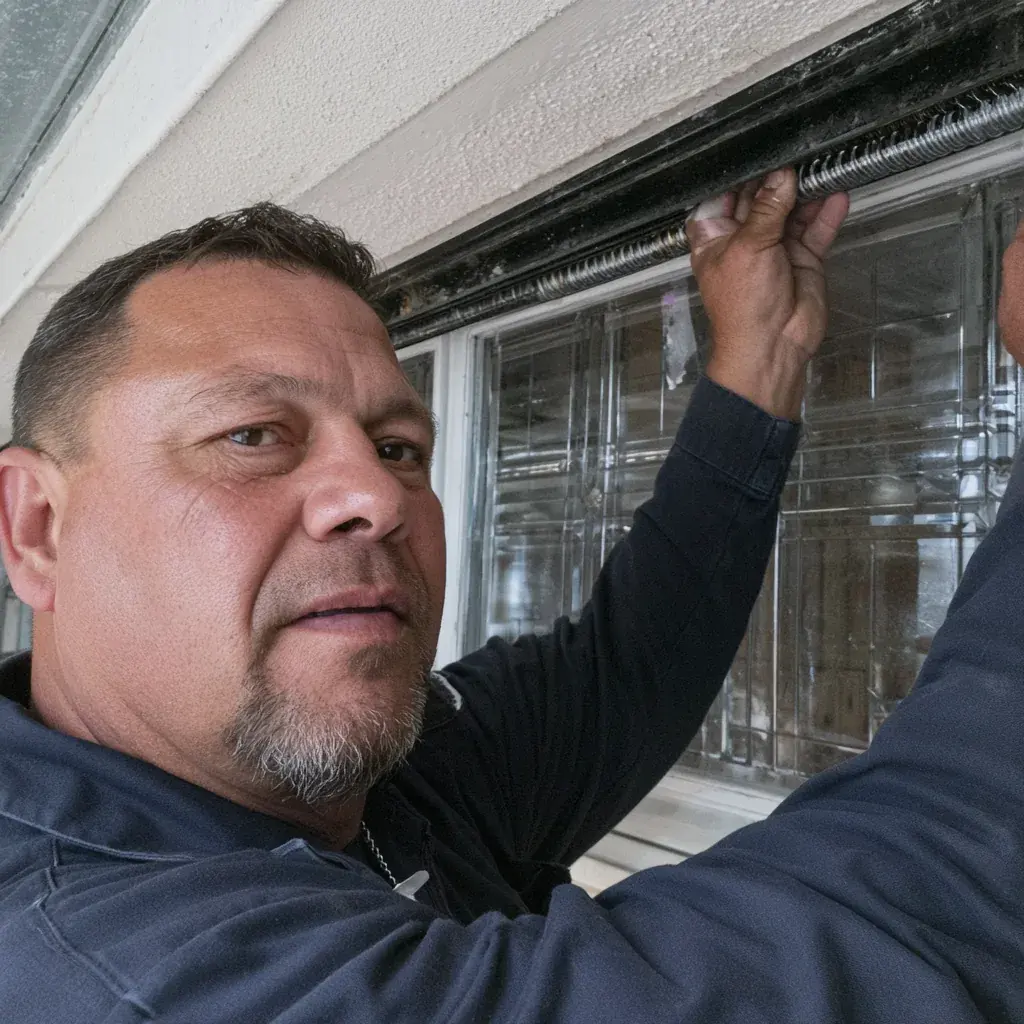
The question comes up after a spring snaps or an opener starts grinding: is this door just old, or did something specific go wrong? Most Carlsbad garage doors are steel sectional units installed when the house was built, and homeowners in Olde Carlsbad or La Costa often have no record of the install date. Age alone rarely tells the story. What matters more is cycle count, salt air exposure near the coast, and whether the hardware was ever serviced.
Panels Versus Moving Parts
A garage door in Carlsbad doesn't fail on one clock. Springs, rollers, opener, and the sections themselves each wear at their own pace, so the door as a whole rarely just stops. Most doors run somewhere between 15 and 30 years before a homeowner in Olde Carlsbad or La Costa Oaks decides the whole unit is worth replacing rather than patching again, but that range depends on how many times a day it opens and what the salt air near the coast has done to the hardware.
Spring Life Runs On Cycles
Torsion springs are rated by cycle count, not calendar years, and one cycle means a full open and close. A door that goes up and down eight to ten times a day in a La Costa or Bressi Ranch household reaches that rating sooner than a rarely used side door in Olde Carlsbad. So spring life depends on how a Carlsbad household actually uses the garage, not on how long the springs have been hanging there.
Opener Life And Heat Cycles
Opener life runs on a similar cycle-based clock, usually landing between 10 and 15 years for a chain or belt-drive unit. Heat-cycle wear on the motor and circuit board is the more common failure point in sun-exposed neighborhoods like Bressi Ranch or Carlsbad Ranch, where an unshaded garage runs hotter through the afternoon. A door that hesitates, reverses without reason, or needs the remote pressed twice is usually the opener aging out, not the door itself.
Rollers Wearing In The Track
Roller life depends on the material and how much sand and salt air reach the track. Nylon rollers on a well-sealed door can run 10 to 15 years, while steel rollers without ball bearings wear faster and grind sooner. Homes near South Carlsbad State Beach or Tamarack Point deal with more salt air working into the track and rollers, so grit and corrosion build up faster there than a few miles inland around Calavera Hills or Rancho Carrillo.
What Actually Damages Panels
Panels themselves are the part most homeowners assume will fail first, but steel sections built to hold their shape usually outlast every moving part attached to them. What actually shortens panel life is impact damage, a bent track pulling a section out of alignment, or sun-faded paint that lets moisture sit in a seam. A dented bottom section near La Costa Avenue or Poinsettia Lane traffic is more common than a section simply wearing out on its own.
Slab Foundations And The Seal
Of everything on the door, the bottom seal has the shortest working life and is the item most likely to be renewed twice over. It sits against concrete that catches whatever comes off the driveway in a downpour, and near the coast it takes salt-laden damp on top of that. A seal gone hard and no longer meeting the concrete is what lets the rest of it begin.
How Daily Use Adds Up
Rollers are usually the first thing to show wear, sometimes within 10 years, well before the springs or the opener are anywhere near done. Nylon rollers in a Calavera Hills or Aviara garage pick up sandy grit that rides in on tires and shoes, and that grit grinds down the roller surface faster than the roller itself ages. A door can look and sound tired from worn rollers alone while the springs underneath still have most of their rated life left.
HOA Style Rules And Repairs
HOA-approved communities like Aviara or Calavera Hills sometimes limit door style and color changes, which can push a homeowner toward repairing an aging door rather than replacing it outright. That choice does not extend the life of a tired spring or a worn opener gear, though. A door kept in its original HOA-approved style can still need the same hardware swaps as one that gets fully replaced, since the moving parts wear independent of the panel's appearance.
Signs The End Is Near
The honest way to think about a door's total lifespan is as several shorter lifespans stacked together. Rollers might get replaced twice, the opener once, and the springs once or twice, all inside the 20 or so years a homeowner in Kelly Ranch or Poinsettia keeps the same set of panels. Once the sections themselves start sagging, cracking at the stucco-adjacent trim, or no longer sealing at the slab, that's usually the point where replacing the whole door costs less over time than keeping it patched.
When Replacement Makes Sense
The point where repair stops making sense and replacement starts is usually the hardware, not the panels. A spring or opener replacement is routine and inexpensive against the whole door. But when the track is bent from a bumped bumper on College Boulevard or Rancho Santa Fe Road, and the panels are dented and faded past matching, the honest comparison shifts from parts cost to whether the whole assembly still holds together.
Checking Where This Door Stands
Getting a straight read on where a specific door stands means checking the spring's condition, the opener's age and cycle history if known, and the roller and track wear, not just guessing from the install year. A homeowner near El Camino Real or in a newer Rancho Carrillo build can have very different wear even at the same age, depending on use and sun exposure. A local inspection catches which part is actually near its limit.
Dealing with this in your home?
Carlsbad runs on marine layer, and it settles heaviest where El Camino Real cuts inland past the Carlsbad Research Center — tracks there hold moisture longer than a beachfront door in Terramar ever will. Rollers gum up with sandy grit blown off Tamarack Point. A garage that stuck shut this morning usually points to one or the other, not a worn opener.